
Hello there fellow beer lovers,
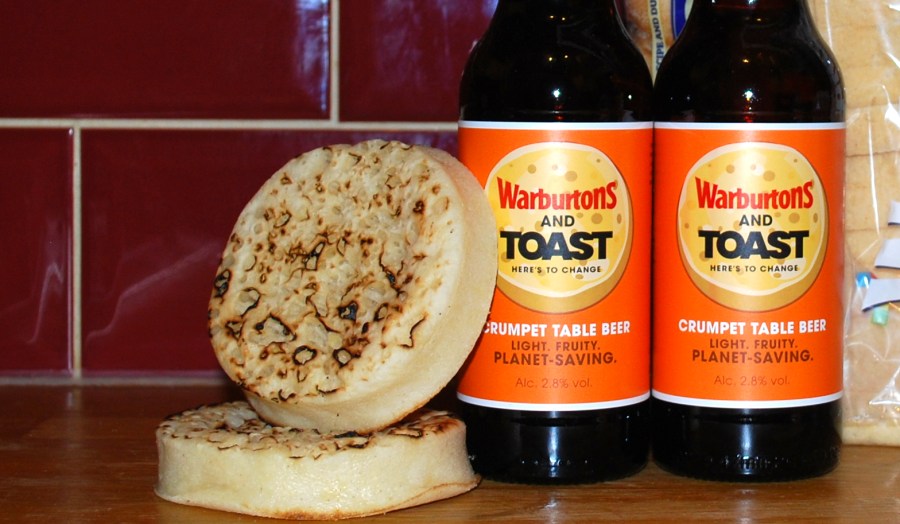
You may remember early last month I talked about Toast and their ethos towards beer, and also covered one of their more unique creations Crumpet Beer. Since then I have been lucky enough to secure an interview with one of their representatives to further explore what makes them tick.
So grab yourself a chair, and a cold one as we have a sit down chat with Kristen Fuller & Louisa Ziane from Toast Ale
Thank you both for taking the time to talk to us today, can you please tell the readers a little about Toast Ale and your philosophy towards beer?
Food production is the biggest contributor to climate change and biodiversity loss – it’s responsible for 80% of deforestation, 70% of freshwater use and approximately 25% of greenhouse gas emissions. But one third of all food is wasted. We set up Toast Ale to change that.
We brew planet-saving beer with surplus fresh bread, and all profits go to charities fixing the food system.
The circular economy business model was inspired by a visit to a Belgium brewery. Tristram Stuart, an environmental campaigner, met the brewers behind the Brussels Beer Project and tasted a beer based on an ancient recipe using bread as the grain. Knowing that industrial quantities of day fresh bread are wasted all over the world (44% of bread is wasted in the UK), Tristram saw an opportunity to use the booming craft brewing industry to deliver positive societal impact.
Tristram and Louisa Ziane, a sustainability adviser, set up Toast Ale in 2015. In 2016 they appointed a founding team – Rob Wilson, a social entrepreneur, and Julie Prebble and David Ryan, both retail experts – and launched the first UK bread beer.
Toast’s approach is two-fold. Firstly we have created a great tasting craft beer that directly solves the problem of food waste – eliminating waste by using surplus as a valuable ingredient. Secondly, we influence wider systemic change by funding charitable work that targets government and corporate policy change, and by creating positive conversations that nudge individual behaviour change.
What better way to start a conversation than over a cheeky pint.
I cant really argue with that! We can see that your ethos clearly in your Collab with Warburtons and the creation of your Crumpet Table Beer (which is delicious by the way), but what further efforts have you made to be environmentally friendly?
We founded Toast Ale as a social enterprise, committing all our profits to charities fixing the food system, with a mission to reduce food waste. Central to this is our approach to brewing all our beers with surplus fresh bread (or wonky crumpets!) and collaborating with breweries all over the world rather than exporting our beer.
We produce an annual Impact Report (part of our commitment to transparency as a B Corp. You can read it here.
We have committed to be Net Zero by 2030. We are determined to reduce our emissions (and that of our supply chain and customers) as far as possible before offsetting. It is simple to buy offsets to be ‘carbon positive’, but can detract from the hard work required to reduce emissions in real terms. And many carbon offsets schemes, such as those that involve tree planting, do not help biodiversity
In 2019 (we’re working on our 2020 carbon footprint), the biggest source of emissions was packaging – aluminium cans and glass bottles . We eliminate packaging when we sell beer
on draught (using reusable steel kegs in partnership with Kegstar rather than the single-use plastic Key Kegs that are common across the industry). We’ve partnered with Waitrose to sell draught through their supermarkets, with local partners like Draught Drop in East London and through our own taproom in Southwark.
Unfortunately Covid and the resulting lockdown has severely limited options for draught beer whilst also bringing a cardboard problem with the increase in home deliveries (though we’re using 100% recycled & recyclable board). It’s really key to engage our customers in the solutions – making a can out of recycled aluminium requires only 8% of the energy used to produce virgin aluminium so recycling is really important.
Staying on the topic of Collaborations, we all know for your collaboration with Warburton, and Brewdog, However, should you have your pick of a brewery whom you choose for the next one?
That is a tough question! There are so many incredible breweries out there and as our ambition is to get the entire industry to adopt circular economy principles to brew with surplus bread, we want to work with all of them!
We are currently focussing on collaborations with fellow B Corp food brands as part of our Rise Up campaign. In the run up to the COP26 Climate Change Conference we’re releasing a series of limited-edition beers that each tells the story of our broken food system, and how we can fix it for people and the planet.
We’ve released Chocolate Stout brewed with Divine Chocolate’s cocoa powder, low-alcohol Lemongrass Lager brewed with teapigs’ pure lemongrass and Baker’s Witbier brewed with organic loaves from Hobbs House Bakery. We will have another 4 beers launching this year with Oddbox, Flawsome, Rebel Kitchen, Rubies in the Rubble and Cafedirect.
For COP26 in November, we’re collaborating with breweries again to launch something quite special. Watch this space!
The Pandemic has been an issue across all breweries worldwide, but what has been the greatest hurdle you have overcome during the Pandemic, and has this drastically changed your approach to business?
Like most breweries, we’ve been severely impacted by Covid-19. Restaurants, pubs and events brought in approximately 65% of our revenue before lockdown, and those customers have themselves been heavily affected as they were forced to close and reduce capacity.
We pivoted to e-commerce and are so very grateful to our community of beer lovers who’ve supported us. We set up out Meal Deal, funding a meal for people in need with every purchase from toastale.com and were able to provide 46,000 meals.
We’ve also been supported by our retail customers – we’re stocked in Waitrose, Co-op and Ocado. But like many we can’t wait for the hospitality industry to open up again.
You create a number of different styles of beer at TOAST, all while adhering to being as environmentally friendly as possible. But how much do beer trends influence the quantity and diversity of beers you produce and is keeping up with the curve a difficult thing to do whilst being environmentally friendly?
We’re all massive beer geeks and always sampling other breweries beers and talking about our new favourites. We keep a close eye on what’s going on in the industry and have weekly team chats to make sure we are always up to date on any trends. With our current Rise Up Series of beers, we’re working with B Corp partners to brew some epic limited edition beers. Styles that we have wanted to try in our range for a while and that also have been requested by our loyal customers. Each beer is highlighting different elements of the ecological crisis, and the systemic change needed to the food system to tackle climate change and biodiversity loss. The aim is to raise awareness of the impact our broken food system is having on the planet and galvanise action by asking people to write to their local MP and ask them to include changes to the food system in environmental policy decisions.
In terms of specifically being “environmentally friendly” – we obviously do all we can. Like working with our packaging company to introduce labels that have a higher recycled content or are made of a more sustainable material, to reduce demand for virgin PP. As a business we have committed to Net Zero by 2030. We are determined to reduce our emissions (and that of our supply chain and customers) as far as possible before offsetting. It is simple to buy offsets to be ‘carbon positive’, but can detract from the hard work required to reduce emissions in real terms. We did however fund forest preservation projects with the Rainforest Trust to the equivalent of our emissions in 2019 and are looking at how best to give back from a carbon perspective for 2021.
You said you often talk about your ‘new’ favourites, but what was the first beer that you had that sparked your passion for Brewing?
The idea behind Toast was sparked in 2015. Our Toastmaster Tristram Stuart, a campaigner on the environmental and social impacts of food production, met the brewers behind the Brussels Beer Project. They’d used bread in their ‘Babylone’ beer, a nod to beer’s origins of being brewed with bread. With bread wasted at a colossal scale (13,000 slices per day from a single sandwich factory), here was a circular economy solution to reduce waste, engage drinkers and raise funds for charity.
And finally, what can we expect to see next from ‘Toast Ale’?
Following on from the recent launch of our Baker’s Witbier, a 5% Belgian-style spiced wheat beer with subtle notes of orange and coriander, we’ll be launching the next in the Rise Up series with Oddbox and Flawsome. Expect juicy, fruity deliciousness.
And that brings todays chat to a close, thank you both ever so much for taking the time to speak to us today. It has been a pleasure, and I wish you all the best for reaching your net zero target of 2030!
If you would like to find out even more about this inspirational comapany, or pick up some of their guilt free beers, you can visit their online store today.
 The|Eternal|Hoptimitsts